I wanted a roguelite that did not pretend to be set in a generic medieval village. Most of the games I grew up playing had European castles and dwarves. The streets I actually grew up on had jeepneys, sari-sari stores, and the smell of fish frying at six in the morning. So I started TIRADOR — a top-down survivors-style game where the world is a barangay and the enemies come out of the rice fields at dusk.
The design problem was finding a fight loop that still felt Filipino once you stripped away the visual paint. A slingshot (“tirador”) as the starting weapon was the answer. It is slow, deliberate, requires aiming. It punishes button-mashing the way our titos punish bad form. From there the upgrade tree branches into things a kid in Bay might actually pick up: bolo, slingshot rocks, palaspas, the family aso as a follower unit.
I built the P0 prototype in Godot 4 over a weekend to test whether the slingshot felt good. It did, barely. The P1 milestone added an enemy spawner, a barangay map made from a TileMapLayer, and the first three weapon upgrades. In May 2026 I shipped the playable arena foundation — validated data files, a real combat loop in-scene, and concept art references wired into the design docs so art and code stay aligned. Art is hand-drawn in Aseprite using a restricted palette pulled from old komiks I scanned at home.
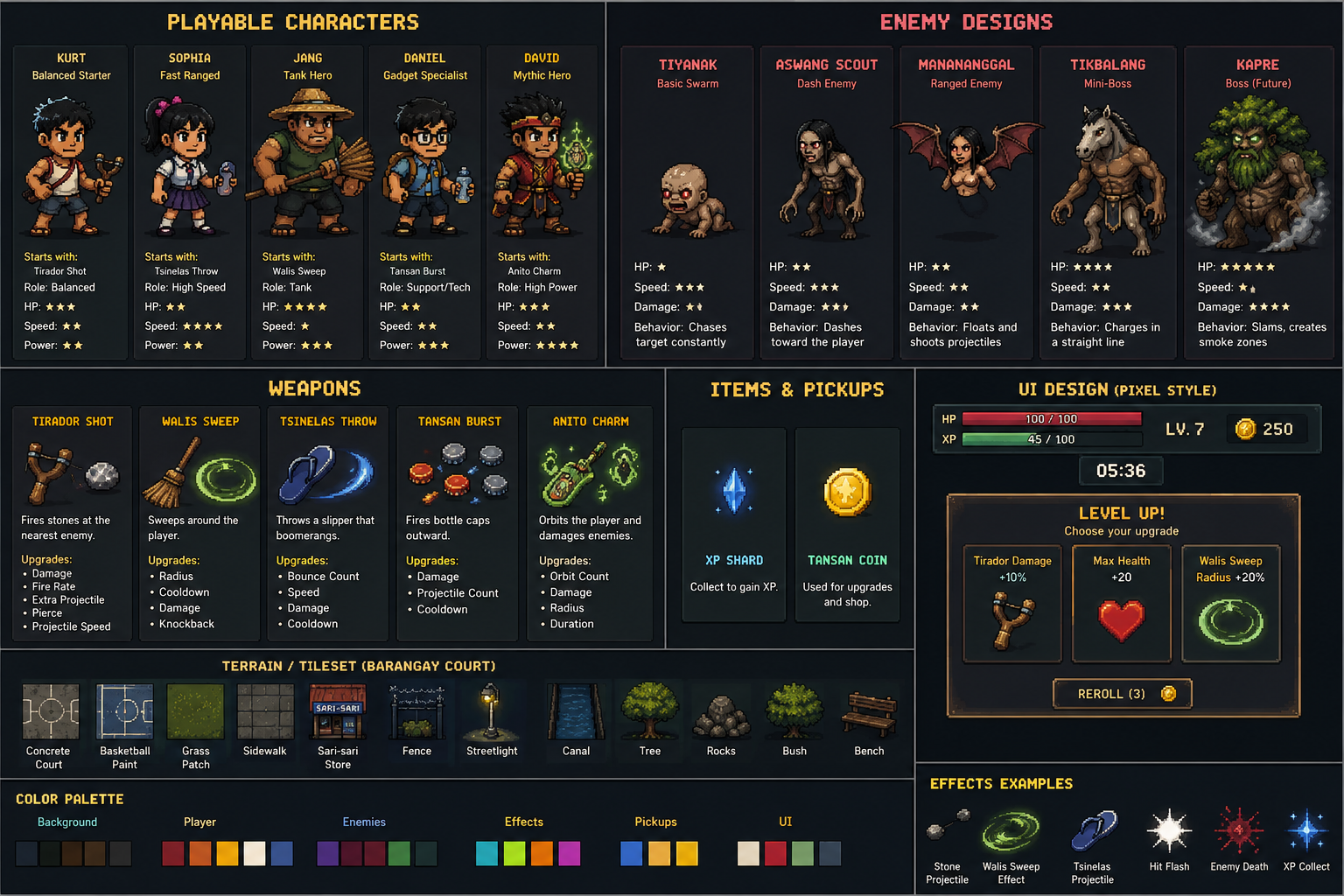
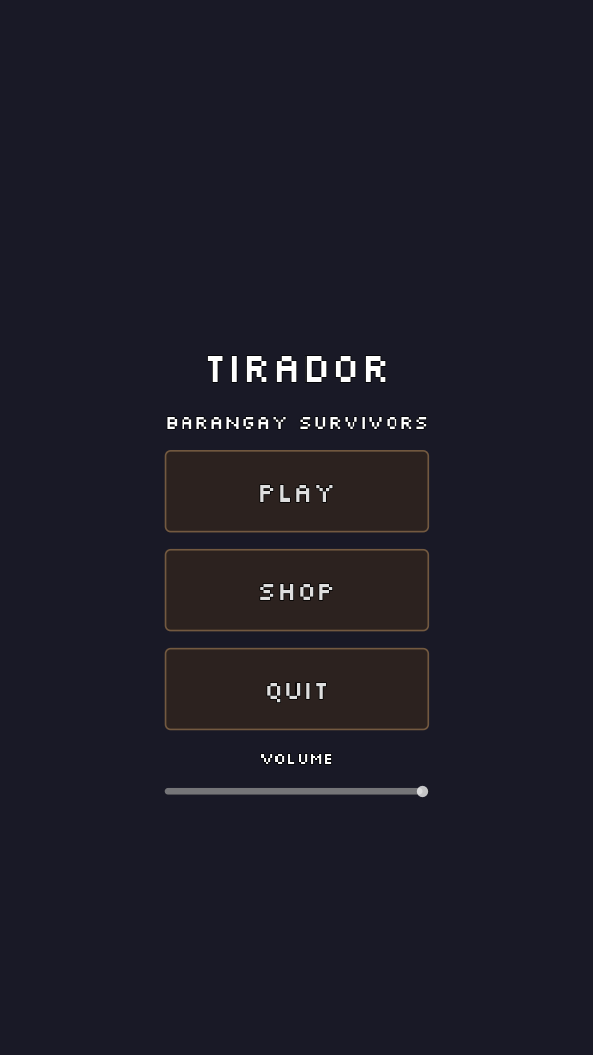
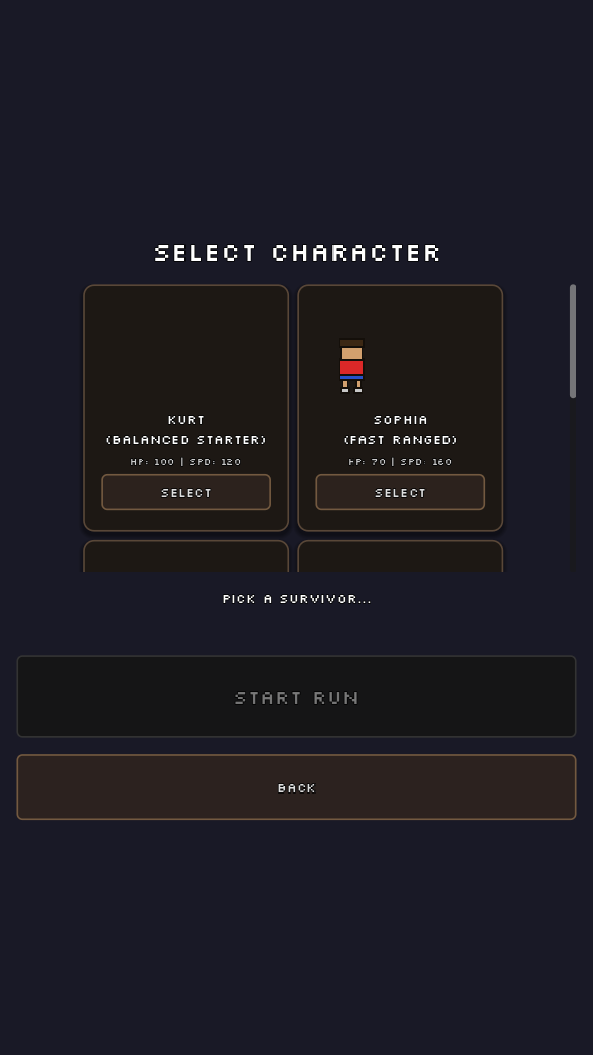
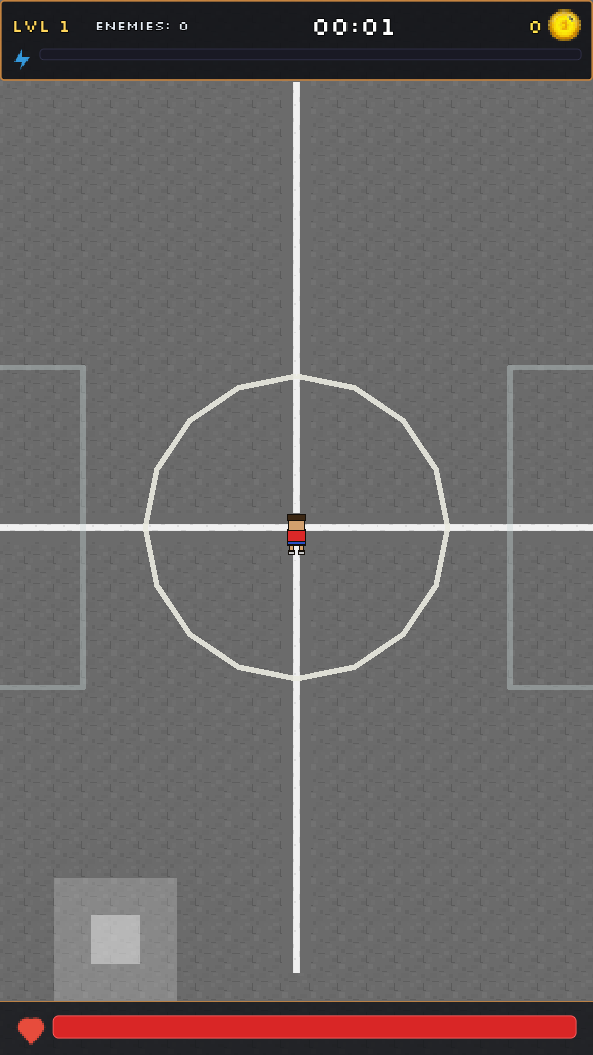
The build is playable but not fun yet. The thing I keep learning the hard way is that pixel art takes longer than code. Every NPC, every prop, every animation frame eats a Saturday. I have started leaning on data-driven content — a single Resource file per weapon and per enemy — so design changes do not require code changes. That decision alone saved the last sprint.
Next milestones are an interior dungeon (the school, after hours), a save system, and a real boss fight. The public demo ships once that loop is stable enough to survive a full run without debug shortcuts.